Science, statistics, and advocacy resources for families and supporters navigating pediatric cancer, specific to the research landscape, the treatment system, and what families inside that world need to know.
Statistics
By the numbers.
15,780
children and adolescents (ages 0-19) diagnosed with cancer in the US each year
Cancer treatment saves lives, but it also systematically attacks a child's ability to eat, absorb nutrients, and maintain the body that is fighting the disease.
75%
of children and adolescents with cancer experience malnutrition during treatment, whether undernutrition or overnutrition. Both compromise treatment outcomes, increase toxicity, raise infection rates, and reduce quality of life.
Chemotherapy damages the gut lining and disrupts the microbiome, causing malabsorption. Cranial radiation can damage the hunger and satiety control mechanism itself. Steroids like dexamethasone push caloric intake to 2,126 kcal/day during courses (vs. 1,775 off them) while simultaneously reducing physical activity. The cancer itself burns calories as active metabolic tissue while inflammatory cytokines suppress appetite and increase energy expenditure at the same time.
When a child is diagnosed, the family enters a system that treats the disease but rarely supports the household holding everything together, and the research on what families actually experience around food during treatment is almost nonexistent.
56%
of households with a hospitalized pediatric cancer patient experienced food insecurity, while 76% of the children themselves were at risk of malnutrition, in one of the only studies to measure both together
A systematic review of 28 qualitative studies across 13 countries found that caregivers often prioritize intake over nutritional value because they receive no individualized guidance. Altered eating behaviors during treatment significantly impact caregiver well-being and family dynamics. The feeding burden falls squarely on caregivers who are already emotionally and financially exhausted.
Food-as-medicine intervention: 100% of families would participate again
A pilot program delivered meal kits (3 household meals per week for 3 months) plus federal nutrition benefits assistance to childhood cancer survivor families experiencing food insecurity, and every family said they would participate again, making it peer-reviewed proof that food-as-medicine interventions in cancer families are both feasible and wanted.
Culinary medicine for caregivers of children with cancer
Children's Hospital of Philadelphia has developed and continues to test an 8-week culinary medicine program for caregivers of children undergoing cancer treatment, delivered remotely with a medical chef and registered dietitian. Evaluates caregiving preparedness, self-efficacy, and pediatric feeding behaviors.
This is why Emmy's Friends exists. When a family is doing rounds of chemotherapy far from home, at 2am, with a child who cannot eat, the answer to "what do we feed her?" should not be a vending machine. The research agrees but the practice has not caught up.
If you are a clinician, dietitian, or researcher working in this space and want to connect, we would like to hear from you. Reach out.
The System
What standard care still misses.
The medical system knows nutrition matters but does not act on what it knows, and the gap between awareness and practice has been documented for nearly two decades.
"Nutritional support remains often overlooked in the treatment of pediatric oncology patients."
Muratore, Leardini, Baccelli, Fabozzi. Frontiers in Nutrition, 2024
19.6
total hours of required nutrition education U.S. medical students received across four years of training, in a national survey where only 27% of schools met the 25-hour minimum recommended by the National Academy of Sciences
of oncologists say nutritional status is "decisive or often crucial" for treatment, yet only 28% routinely assess it and nearly half do so only when the patient asks, or not at all
of pediatric oncology institutions report inadequate staffing for nutrition services, and only 50% screen patients in both inpatient and outpatient settings
standardized, validated nutrition screening protocols exist across pediatric cancer centers, where different definitions of malnutrition, different tools, and ad hoc approaches have persisted from 2006 through 2024
52% of pediatric oncology dietitians report inadequate staffing
62% have fewer than 5 years of experience, and 60% are responsible for the entire cancer continuum alone, from diagnosis through survivorship, with the three primary barriers being inadequate staffing, lack of time for research, and lack of evidence-based guidelines.
Only 40% of oncology residents demonstrated adequate nutrition knowledge
Only 32% exhibited proficient performance in nutritional care, and most reported lacking any exposure to cancer nutrition education during their academic and residency training.
42% of centers have no standard malnutrition treatment guideline
An international survey of 26 institutions across 11 countries found that only 58% use a validated screening tool. Nine different malnutrition indicators are in simultaneous use. Identical patients receive dramatically different interventions depending on which measurement system a clinician happens to use.
Research in this area is accelerating. The studies below are independent work by other teams, not programs Emmy's Friends runs or partners in. We follow them because they test the same idea we were built on, that food, cooking, and family support belong in cancer care.
Drexel University & CHOP · Beginning 2026
From Kitchen to Clinic: Family-Centered Food as Medicine
A 12-week program pairing weekly medically tailored meal delivery with registered-dietitian coaching for caregivers, enrolling pediatric cancer patients and their families. One of the closest research parallels to the meals, cooking, and family support at the heart of Emmy's Friends.
UNC Lineberger Comprehensive Cancer Center · Underway
MTM-Kids: Medically Tailored Meals in Pediatric Oncology
Delivers twelve weeks of frozen medically tailored meals to adolescent patients and their parents, measuring feasibility and food security during treatment. Results expected in 2026.
Provides groceries and transportation to low-income families through the first six months of chemotherapy. The first health-equity intervention trial in pediatric oncology, with pilot results published in 2023.
A pilot comparing oral nutrition supplements, appetite stimulants, and tube feeding for children facing cancer-related malnutrition, which affects a majority of pediatric patients during treatment.
Emmy received her care at CHCO. Their oncology and research programs are among the most active in the country, and their work on CAR-T cell therapy and integrative care is worth knowing.
Research Snapshot
Center for Cancer and Blood Disorders
CHCO is a principal member of the Children's Oncology Group and participates in the Pediatric Brain Tumor Consortium, New Approaches to Neuroblastoma Therapy (NANT), and the Center for International Blood and Marrow Transplant Research.
300+
active clinical trials
100+
active research studies
8
new therapies contributed
CAR-T Cell Research: CHCO and CU Anschutz launched a first-in-human dual-antigen (CD19/22) CAR-T trial for pediatric and young adult patients with B-ALL, with FDA breakthrough designation granted. A CD22 CAR therapy developed at CU Anschutz has shown 85% remission rates in initial studies, with 50+ patients treated through the investigator-led phase 1 trial as of 2025.
When Emmy needed proton radiation therapy, her family moved to Boston for the better part of three months. Mike called it "the best hospital in the country, perhaps the world." They lived across the street at Christopher's Haven and made it feel as much like a family vacation as they could manage.
Emmy's Proton Therapy Center
Massachusetts General Hospital
Mass General Brigham for Children's Division of Pediatric Hematology and Oncology treated Emmy during her proton radiation in Boston. MGH is home to the only proton therapy site in New England, a minimally invasive treatment that targets pediatric tumors while minimizing long-term effects on growth and development. MGH is a member of the Children's Oncology Group (COG) and the Pediatric Hodgkin Lymphoma Consortium.
Current Research: Ongoing work in microRNA identification in leukemia, CAR T-cell therapy development for pediatric brain tumors, and circulating tumor cell isolation using microfluidic technologies.
Dana-Farber Cancer Institute and Boston Children's Hospital jointly operate one of the largest and most respected pediatric cancer programs in the world. Their combined program is an NCI-designated comprehensive cancer center and a leading center for pediatric oncology clinical trials, immunotherapy development, and precision medicine for childhood cancers.
Emmy's family stayed at Christopher's Haven during their months in Boston. Free, furnished apartments directly across the street from Mass General for families of children receiving cancer treatment. Read more about treatment housing →
Research Organizations
Who's funding the science.
Federal funding for pediatric cancer research remains chronically low relative to the disease burden, and these organizations exist to close that gap.
Largest Non-Government Funder
St. Baldrick's Foundation
$371M+ funded since 2005 · 384+ institutions
Children lose an average of 70.4 life years to cancer compared to 14.9 for all ages. In the June 2025 grant cycle: $30M in excellent-scoring research was requested, $10M was awarded. A $20M gap in unfunded research that met the scientific bar.
One of the largest independent childhood cancer charities in the US. In 2025, supported nearly 300 grants including 131 new awards. All grants selected via NIH-style peer review. Also manages the Crazy 8 Initiative ($35M in 8 collaborative research projects) and sponsors Flashes of Hope photography.
National advocacy organization for families affected by childhood cancer. Produces authoritative statistics resources, policy advocacy, and family support programs. Strong PDF resource library including financial impact data from 1,700+ family surveys.
CureSearch funds translational research. Pre-clinical projects it funds are 7x more likely to advance to clinical trials and move more than a year faster than the national average. CureSearch manages the Children's Oncology Group, the world's largest pediatric cancer cooperative research entity: 6,500+ physicians, nurses, and researchers across 200+ institutions globally.
Largest patient advocacy funder in this disease area
Founded in 1991, PBTF identifies and funds gaps in pediatric brain tumor research while partnering with researchers and patient families to set priorities as the primary advocacy voice in a disease category that is chronically underfunded relative to adult brain tumors.
Works directly with doctors, researchers, and nurses to identify specific research challenges across three priorities: Powering Research, Equitable Care, and Survivorship and Mental Health, with four grant types from basic science through emerging investigator fellowships ($75K-$150K/yr).
Every book here is specifically about pediatric cancer, the treatment system, integrative approaches, and what families inside that world need to know. Updated as we read.
Integrative Medicine · Parent Resource
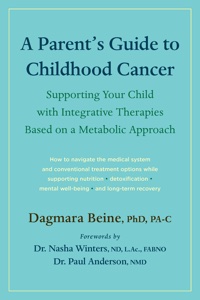
A Parent's Guide to Childhood Cancer
Dagmara Beine, PhD, PA-C / Chelsea Green Publishing, 2024
Written by a physician assistant with a PhD in Integrative Medicine who is also the mother of a child with AML. Argues that conventional oncology fails to incorporate safe, effective integrative therapies and teaches parents how to use integrative approaches alongside surgery, radiation, and chemotherapy. The most recent and most directly aligned book with Emmy's Friends Foundation's food-as-medicine positioning.
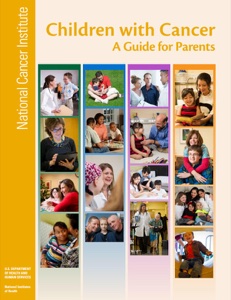
NCI's comprehensive patient education guide covering diagnosis, treatment types, side effects, coping, survivorship, and integrative medicine. Five sections. Authoritative and free in every format: PDF, Kindle, ePub. One of the most useful single resources for a newly diagnosed family.
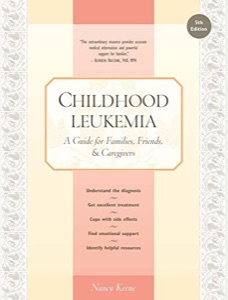
Childhood Leukemia: A Guide for Families, Friends and Caregivers
Nancy Keene / Childhood Cancer Guides, 5th edition, 2018
Comprehensive guide reviewed by pediatric oncology experts. Covers medical information, treatment options, coping with procedures and hospitalization, and family, school, and financial issues. Includes stories from 175+ parents and children. Leukemia is the most common childhood cancer, accounting for 28% of all pediatric diagnoses.
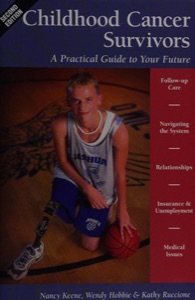
Covers long-term and late effects from treatment, emotional aspects of surviving cancer, follow-up care schedules, healthcare navigation, and lifestyle choices to maximize health. Relevant to Emmy's Friends' extended mission: supporting families well beyond the end of active treatment. Recommended by the Leukemia and Lymphoma Society.
Every claim on this page is sourced below. Grouped by theme, with key findings at a glance. We link directly to free full text wherever it is available.
Landmark Reviews
The Lancet Child & Adolescent Health · 2020
Nutrition During Childhood Cancer Treatment: Current Understanding and a Path for Future Research
Malnutrition prevalence as high as 75% (WHO definition: undernutrition or overnutrition). Documents "limited advances in elucidating the underlying pathophysiological drivers" despite two decades of research. The most-cited review in this field.
The Relevance of Nutrition to Pediatric Oncology: A Cancer Control Perspective
Establishes nutritional status as "a potentially modifiable prognostic factor" affecting cancer outcomes. Calls for consistent longitudinal nutritional assessment from diagnosis through long-term follow-up.
Role of Nutrition in Pediatric Patients with Cancer
The most comprehensive mechanistic review available. Documents undernutrition prevalence by cancer type (0-70%), overnutrition (25-75%), cytokine-driven appetite suppression, drug-specific effects, and gut microbiome disruption. Key finding: rapid weight loss of 5% or more within three months of diagnosis significantly increases febrile neutropenia episodes.
Standards of Nutritional Care in Pediatric Oncology: A Children's Oncology Group Study
Survey of 233 COG institutions found no consistency in nutrition services. Nutrition assessment did not routinely occur. Different definitions of malnutrition across centers, ad hoc intervention approaches. Documented nearly 20 years ago.
Pediatric Oncology Nutritional Practices in High-Income Countries (SIOP Survey)
International survey of 71 institutions: 47% report inadequate staffing for nutrition. Only 50% screen both inpatient and outpatient. No consensus on screening practices. The problems documented in 2006 persist.
How little nutrition training U.S. physicians receive
In 2008–09, U.S. medical students averaged just 19.6 hours of required nutrition instruction across all four years, and only 27% of schools met the 25-hour minimum recommended by the National Academy of Sciences (Adams et al., Academic Medicine, 2010). A follow-up survey of 2012–13 curricula found 71% of schools still fell short of that minimum (Adams et al., Journal of Biomedical Education, 2015). More recent figures come from students rather than schools: in a survey of more than 1,000 U.S. medical students, about 58% reported receiving no formal nutrition course, and those surveyed averaged roughly 1.2 hours of nutrition education a year (Duggan et al., Journal of Wellness, 2023). No comprehensive national curriculum survey has been published since. In 2026, 73 medical schools pledged to require at least 40 hours of nutrition education for students starting that fall, so the picture may be beginning to shift (HHS, 2026).
Awareness and Consideration of Malnutrition Among Oncologists
97% of oncologists say nutrition is "decisive or often crucial" for treatment outcomes. Only 28% routinely assess it. 49% assess only when the patient asks, or not at all. Only 5.7% of surveyed oncologists even completed the survey.
When Reality and Research Collide: Guidelines Are Essential for Optimal Nutrition Care
52% of pediatric oncology dietitians report inadequate staffing. 62% have fewer than 5 years experience. 60% cover the entire cancer continuum alone. Three barriers: staffing, time, and lack of evidence-based guidelines.
Malnutrition Screening and Treatment in Pediatric Oncology: A Scoping Review
Documents a "paucity of evidence for malnutrition screening and intervention in pediatric cancer treatment." No universal standardized approach. No consistent definition of malnutrition across centers.
Survey of International Pediatric Nutritional Supportive Care Practices
26 institutions across 11 countries: 42% have no standard malnutrition treatment guideline. Nine different malnutrition indicators in simultaneous use. Identical patients receive different interventions depending on which system a clinician uses.
Risk of Malnutrition and Food Insecurity in Pediatric Cancer Patients: The NutriCare Study
76% of hospitalized pediatric cancer patients at risk of malnutrition. 56% of their households experienced food insecurity. One of the only studies to measure both nutritional risk and food security together in this population.
CHEF Intervention: Food-as-Medicine for Childhood Cancer Survivor Families
Delivered meal kits (3 household meals/week for 3 months) plus federal nutrition benefits assistance to families experiencing food insecurity. 100% of families said they would participate again. Peer-reviewed proof that food-as-medicine interventions for cancer families are feasible and wanted.
Informal Caregivers' Experiences of Feeding Children with Cancer: A Systematic Review
Systematic review of 28 qualitative studies across 13 countries. Caregivers face major gaps in dietary guidance and often prioritize intake over nutritional value. Altered eating behaviors significantly impact caregiver well-being and family dynamics.
Culinary Medicine for Caregivers: A Mixed-Methods Feasibility Study (CHOP)
Children's Hospital of Philadelphia protocol for an 8-week culinary medicine program for caregivers, delivered remotely with a medical chef and registered dietitian. Evaluates caregiving preparedness, self-efficacy, and pediatric feeding behaviors.
Nutritional Support in Pediatric Cancer: Novel Insights and Future Perspectives
Nutritional support "often overlooked" in pediatric oncology. BMI unreliable during treatment, no validated serum biomarkers for children, no standardized guidelines. International survey data shows "high variability in nutritional approach among pediatric oncological centers."
Managing Undernutrition in Pediatric Oncology: A Consensus Statement
Delphi consensus establishing standardized recommendations for identifying malnutrition early and optimizing nutritional management during anticancer therapy. Provides the clinical framework that validates why nutritional support matters.
Integrative Medicine Across the Pediatric Cancer Care Trajectory
Reviews evidence for complementary approaches. Honey reduces oral mucositis and febrile neutropenia. Ginger reduces chemotherapy-induced nausea. Probiotics safely reduce GI side effects. Glutamine and vitamin E for mucositis prevention.
Integration of Food and Nutrition into Oncology Care
Proceedings from the first "Food is Medicine in Oncology Care" symposium. Maps gaps in food and nutrition integration into cancer care and identifies opportunities for clinical and community intervention.
Nutritional Concerns of Survivors of Childhood Cancer
Childhood cancer survivors face a high burden of chronic health conditions. Dietary interventions represent an opportunity to mitigate chronic disease risk in survivorship. Reviews eating patterns post-treatment and treatment-related factors contributing to long-term health issues.
Share this page. Most people do not know that 75% of children with cancer experience malnutrition during treatment, or that no standardized nutritional care exists in pediatric oncology.
Ask about nutrition screening. If your child is in treatment, ask the care team: is there a dietitian on this team? Is nutritional status being assessed at every visit? What screening tool is being used?
Support the organizations doing the work. The research institutions and nonprofits listed on this page are funding the science, running the trials, and advocating for policy change. Every dollar matters.
Connect with us. If you are a clinician, dietitian, researcher, or family with lived experience in this space, we want to hear from you. Reach out.
A note on sources: This page links to peer-reviewed journals, government health agencies, and nonprofit research organizations. It does not constitute medical advice. For decisions about your child's care, work with your oncology team. We link directly to free full text (PDF / PMC) wherever it is available.